Click Here to Register for the Ray Perrault Memorial Golf Tournament
(CFHI and PMA California are co-hosts).
Foundries and the Birth of California: In February of 1848, Mexico and the United States signed a treaty which ended the Mexican War and yielded a vast portion of the Southwest, including present day California, to the United States.
Several days earlier, January 24, 1848, gold had been discovered by James W. Marshall on the American River near Sacramento, and the ensuing gold rush hastened Californias admittance to the Union. With the Gold Rush came a huge increase in population and a pressing need for civil government.
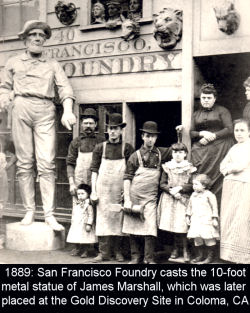
In 1849, Californians sought statehood and, after heated debate in the U.S. Congress arising out of the slavery issue, California entered the Union as a free, nonslavery state by the Compromise of 1850. California officially became the 31st state on September 9, 1850. The Golden States rich history has since been shaped by people of every ethnic background who traveled here seeking economic, social and educational opportunity, and a life of quality and breathtaking beauty. But the birth of California would not have been the same without a thriving and productive foundry industry.
California foundries manufactured the metal tools, products, and infrastructure that built our state. Foundry workers transformed metal by melting it and creating mining instruments, agriculture equipment to move water, and defense items to defend our country. When California grew, there were foundries to support this growth. Foundries are one of California's oldest industries and are still a critical part of our prosperous state. Learn more about the state's foundry industry and the California Foundry History Institute (CFHI) by exploring this site, viewing our archives, and visiting the CFHI museum.